

For several years, sales and also marketing strategies such as multichannel and omnichannel approaches have continued to emerge.
Indeed, consumer habits have changed. New consumer trends have emerged: notably through the evolution of digital technology and the emergence of e-commerce giants.
Various studies carried out by Harvard Business but also Forbes show that:
- 73% of consumers use different channels for their purchases.
- 81% of consumers research online before making purchases in physical stores.
- 82% of consumers use their phones to validate their purchases in store.
For many years, commerce was mainly done in the traditional way: physical stores. From now on, the choice of an omnichannel approach to sales but also to marketing is essential.
What is the omnichannel approach?
The omnichannel approach seeks to offer your customers a fully integrated purchasing experience. From physical stores to virtual stores, including mobile applications and all the possibilities offered by the offline and online world.
Indeed, an omnichannel approach is the integration but also the cooperation of the different channels used by organizations to interact with consumers, with the aim of creating a coherent brand experience. This approach includes physical channels (notably stores) but also digital channels (e-commerce websites for example).
The goal of an omnichannel strategy is to create a convenient and transparent user experience for consumers, putting the customer at the center of everything.
An omnichannel strategy can give consumers the ability to find and buy online, in-store, or a combination of both – such as the “Click & Collect” option which allows you to buy online and collect the item in store.
Nowadays, many industries are benefiting from omnichannel strategies. Whether in the fields of health, retail, finance but also technology.
Ne pas confondre approche multicanale et approche omnicanale
It is essential not to confuse multichannel and omnichannel.
L’approche multicanale
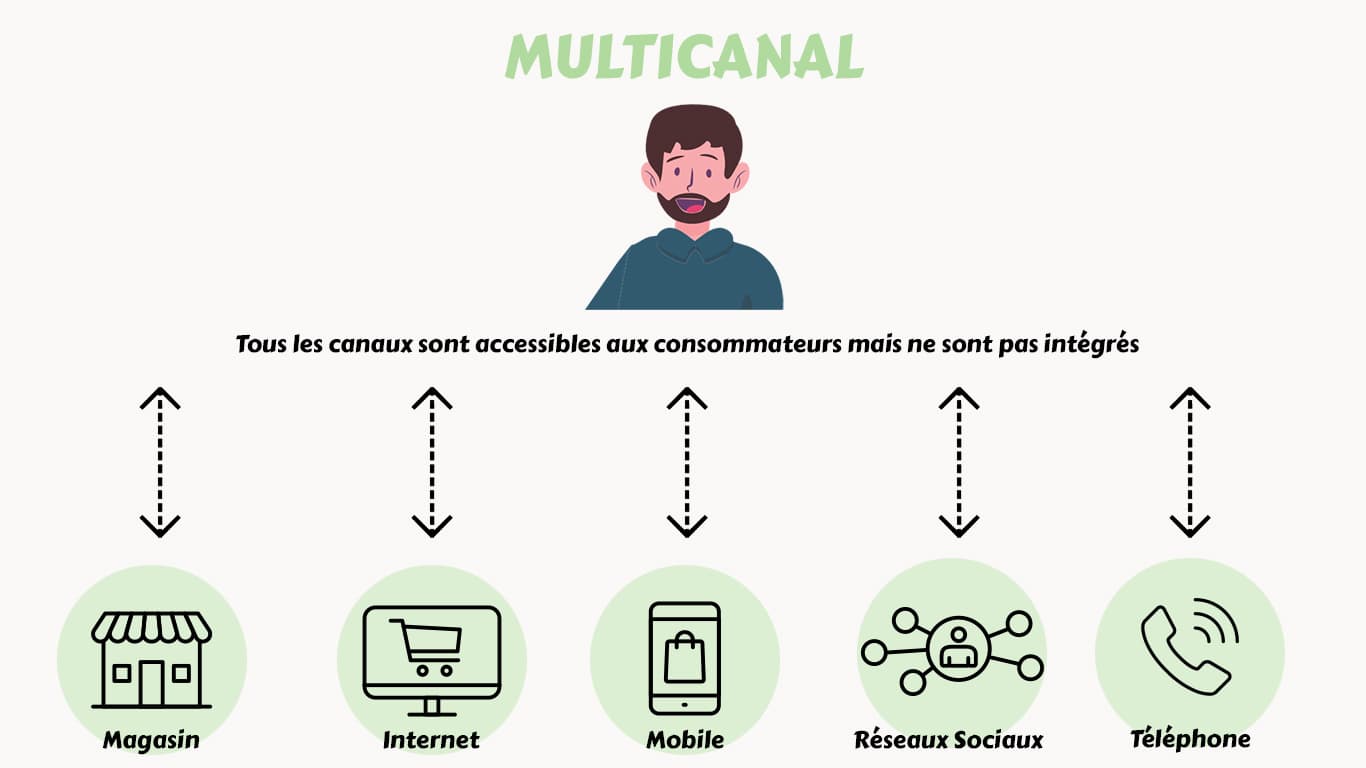
The multichannel approach is simpler to use. It allows you to publish content on different channels. Indeed, several years ago, brands and companies could only be in contact with their customers in two distinct ways: physically through their stores, but also remotely via telephone and mail. It is only the arrival of new technologies that has led to the creation of new so-called digital channels: website, applications, newsletters, social networks, etc.
Thus, a multichannel strategy consists of creating various visibility and contact channels such as: the creation of pages on social networks, the development of a mobile application, the creation of an e-commerce site, etc. Therefore, the final goal of the multichannel approach will be to touch as many channels as possible independently while the omnichannel approach will aim to integrate a complete experience for the customer.
L’approche omnicanale
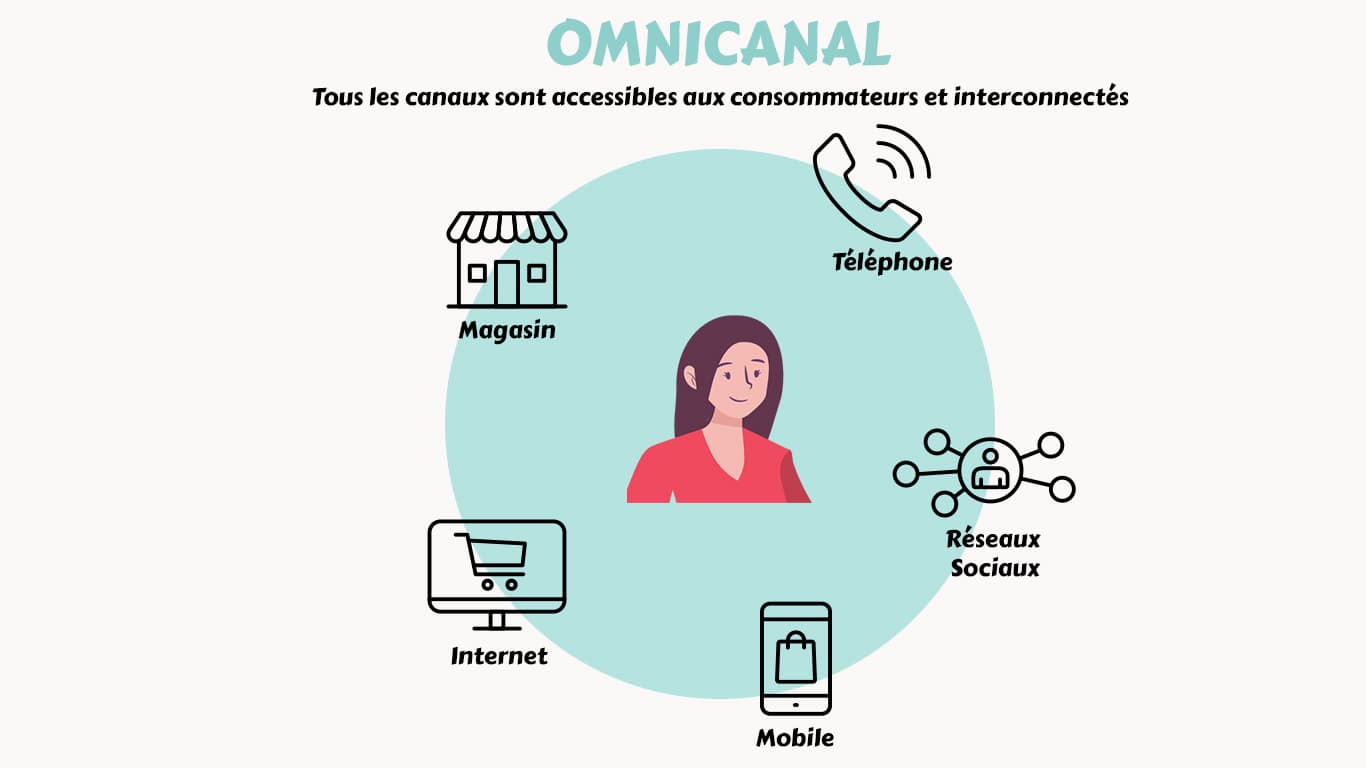
The omnichannel approach merges the different channels to offer a complete and pleasant customer experience. Companies therefore offer the same services across all channels, whether online but also offline. No difference will be perceived between the different channels. The transitions between them will be smooth.
Among the examples of an omnichannel system, we can find the Click & Collect option which will allow the consumer to make their purchase online but to collect it in store. Or even the use of QR codes, digital terminals or Wi-Fi access made available in stores which will be directly linked to the brand's digital channels in order to facilitate the customer experience as much as possible.
The omnichannel approach is intended to be comprehensive in order to take advantage of all channels in order to offer consumers a unique customer experience.
The advantages of an omnichannel approach
Adopting an omnichannel strategy offers many advantages, including a complete and integrated customer experience. It allows you to:
Adapt to consumer habits
Over the years, consumer habits have evolved significantly. Customers have indeed become more and more demanding regarding their purchasing power and options. The purchasing process is no longer just about going to a point of sale and buying a product but it is about elaborate research and in-depth comparisons of different products before making a decision and making the purchase.
Strengthen your brand image
Choosing an omnichannel strategy also means developing your image and thus the credibility of your brand. Being present on different channels will allow companies to highlight their offers and give them the opportunity to stand out from their competitors.
This online presence through the publication of informative content such as blog articles will help create a bond of trust between potential prospects and customers. That's not all, being present on different channels will also give you the chance to consolidate your brand image.
Improve your business performance
A successful omnichannel strategy is not only better visibility but also an increase in sales and therefore performance. Indeed, the easier and more consistent the consumer experience is across the different channels used, the more you increase your sales conversion rate.
Indeed, the omnichannel approach will allow you to improve your performance indicators (KPI) because it will allow you to better target your prospects and customers. This will increase click-through and conversion rates but also reduce your costs per click for your online advertisements.
Improve your customer experience
Indeed, choosing an omnichannel marketing strategy allows consumers to make their purchases at any time of the day but also at night. He is free to choose what suits him when he wants and where he wants (physical stores, e-commerce site, mobile application, etc.). He also has the choice of delivery method, whether to home, to a relay point but also to Click&Collect.
Indeed, as mentioned above, 73% of consumers use different channels for their purchases and more than one in eight people say they use the Click & Collect option. This option allows customers to save shipping costs but also to exchange or return items purchased online directly in store. So many options and features that help improve the customer experience.
Optimize your inventory management
Inventory management is one of the most important benefits of the omnichannel approach. In fact, your stock is entirely managed from a central platform (a management tool such as an ERP for example) and in real time. So your customers can have instant access to the items you have in stock both online and in store.
In summary, why choose an omnichannel approach?
Choosing the omnichannel strategy means allowing your customers to make their purchases when they want. Transfer your products from one stock to another, or simply deliver to your customers. Offer the Click & Collect option but also order in store and have it delivered directly to their home, etc.
The omnichannel marketing strategy is above all to choose the future. Your customers thus have the choice between an online experience while having the option to switch to an in-store purchasing experience and vice versa. Thus, adopting the omnichannel approach can help you increase your customer portfolio, guarantee customer satisfaction in order to retain them, but above all it is a real competitive advantage.